
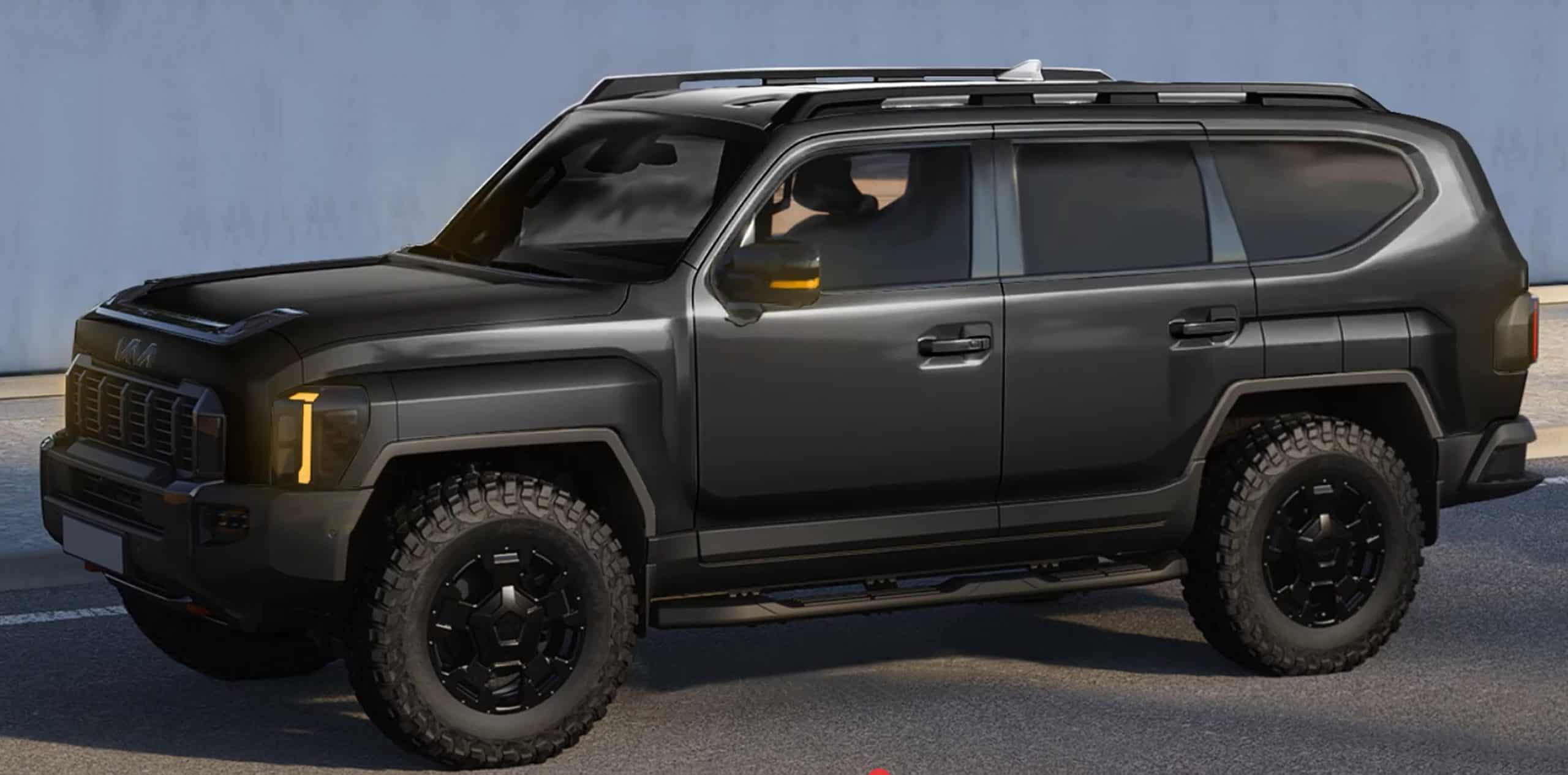
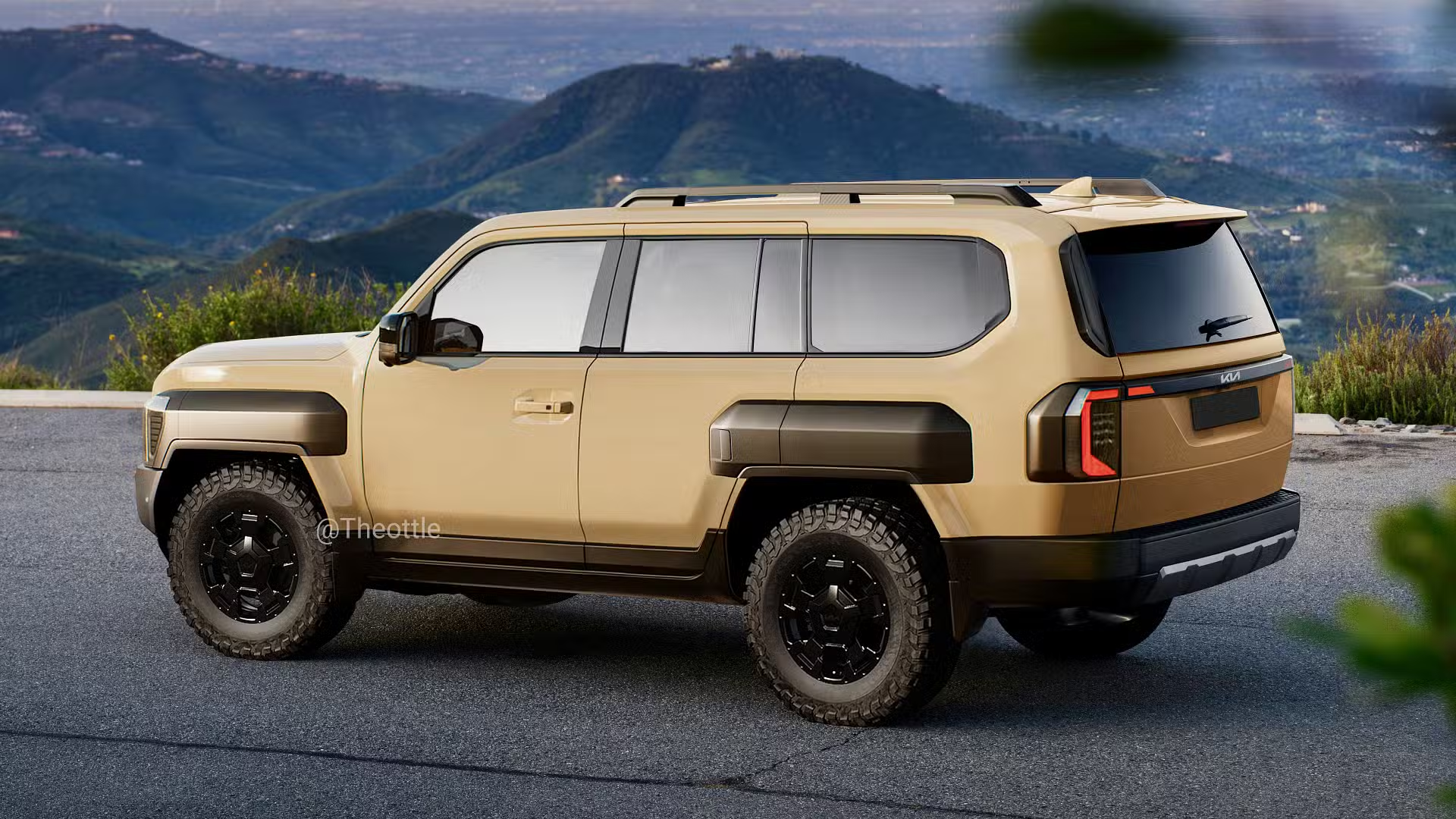
Kia Australia appears to be exploring the possibility of launching a new ladder-frame SUV, potentially based on the underpinnings of the upcoming Kia Tasman. If realised, this move could see Kia enter the competitive off-road SUV market, where it would face off against established players like the Toyota LandCruiser Prado and Ford Everest.

Australia alone is not enough
The concept of a Tasman-based SUV could give Kia a serious contender against key rivals. However, its production would require more than just interest from the Australian market.
“We’d love to spawn a ladder-frame SUV, like an Everest competitor, out of that same platform. And theoretically you could, but it is something that we still have to negotiate hard with headquarters,” said Roland Rivero, General Manager of Product Planning at Kia Australia, in an interview with CarsGuide.
“What we need for it to happen is other markets, major markets that source Tasman, to also want to have a ladder frame SUV,” said Mr Rivero.
“We’re hoping that South Africa or the Middle East would be keen on it, but at the end of the day we need all of the stars to align for something like to happen.”
Join thousands of members!
The Kia Tasman Club is a supportive community that provides advice on modifications and accessories, organise events, and keep you up to date with the latest news and rumours. Best of all, it’s free to join!
No plans in South Korea, yet
Kia’s South Korean HQ has denied having begun work on an SUV. “We haven’t got anything on our drawing boards. I really like what the Tasman has and, just from my point of view, it has a huge amount of potential as a visual statement. But that’s all we have at the moment.” said Kia’s VP of Next Exterior Design, John Buckingham.
“That’s what we’re doing now. We are setting our stall. This is the aesthetic; this is the approach (we) want to take. And that’s what I mean by this journey. So, we have to see what comes of it really.”
A replacement for the Mohave
The announcement that production of the Mohave (also known as the Borrego) is ending could work in Kia Australia’s favour. The Mohave, a body-on-frame SUV produced in South Korea, has served niche markets but is now considered outdated. Its discontinuation leaves a significant gap in Kia’s lineup, potentially paving the way for a new ladder-frame SUV based on the Tasman platform.
Adding credibility to this theory is the sighting of a heavily modified off-road version of the Mohave being tested in late 2023. This occurred shortly after Kia confirmed the production of the TK ute, now officially named the Tasman. The timing has sparked speculation among industry insiders, raising questions about why Kia would trial an off-road SUV so soon after axing the Mohave and amid the Tasman’s development.


North America and six-cylinder options
Two of the most asked questions about the Tasman are: “Will it have a six-cylinder engine?” and “Is it offered in North America?” For years, the Mohave answered both with a resounding yes. If a Tasman-based SUV were to be sold in the US, a similar 6-cylinder would be minimum expected by power-hungry yanks; a 4-banger won’t cut the American Mustard.
Interestingly, the Tasman was spotted early in development undergoing emissions testing in the United States with a V6 engine, and a production-ready X-Pro model was seen in California just days ago.
While a Tasman-based SUV might not seem an obvious choice at first glance, the economies of scale make a compelling case. If Kia is interested in offering mid-size pickup and off-roaders in the U.S., providing ladder-frame SUVs to Australians, and delivering six-cylinder power globally, this strategy could become a no-brainer.


Genesis goes off-road
Genesis, Hyundai’s luxury brand, has delivered the high-performance GV80 SUV with two potent six-cylinder engines:
- 3.5L twin-turbocharged V6 petrol: 279 kW / 530 Nm
- 3.0L inline-6 turbo-diesel: 204 kW / 588 Nm
A Tasman SUV would need at least one of these engines to challenge off-road rivals like the Toyota Prado, Nissan Patrol, and Ford Everest effectively.
Curiously, the turbo-diesel, a relatively new engine into which Hyundai invested significant R&D funds, is no longer available. While sports SUV buyers have largely favoured the petrol option, diesel remains the preferred choice for off-roaders due to its superior torque and efficiency. This raises an intriguing possibility: a Tasman SUV equipped with this diesel engine could not only justify Hyundai’s investment but also resonate with the off-road market.
What’s especially interesting is Genesis’ recent efforts to position the GV80 as a capable off-roader. From taking motorsport legend Jacky Ickx to the Dakar Rally to transforming the GV80 into a snowmobile for a dramatic pursuit by helicopters and drones, the brand appears to be broadening its image.
Could Genesis be paving the way for a luxury off-road SUV?